Light profoundly shapes our biology and circadian rhythms far more than most realize. By adopting strategic home illumination—through thoughtful layered lighting design, optimized color temperatures (warm for evenings, cool for mornings), and convenient smart controls—you can sharpen daytime focus and productivity, protect deep restorative sleep, reduce eye strain, and noticeably elevate mood, energy, and overall well-being in every room of your home.
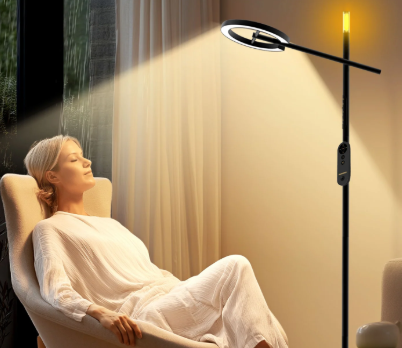
Light is the most potent invisible force in our homes. It is the primary "Zeitgeber"—a biological time-giver that dictates the production of melatonin in our brains, the metabolic energy we bring to our tasks, and the psychological "weight" of our living spaces. Yet, in most residential settings, lighting is treated as a secondary aesthetic afterthought—a single centered fixture or a series of harsh, utilitarian recessed cans that fail to respond to the nuance of human activity.
To create a home that truly supports both high-stakes productivity and deep, restorative relaxation, one must master the "Science of Lumens" and the "Art of the Shadow." Truly effective lighting design is not about mere brightness; it is about contrast, temperature, and strategic layering . This guide explores how to strategically deploy light to transform your living environment into a responsive sanctuary that aligns with your biological needs while maximizing the functional potential of every square foot.
The Biological Blueprint: Circadian Rhythm and the Kelvin Scale
The human eye evolved under the shifting spectrum of the sun, and our internal clocks—our circadian rhythms —are hardwired to respond to specific wavelengths. Residential lighting that ignores this biological reality can lead to "social jetlag," chronic fatigue, and decreased focus.
1. The "Blue Light" Stimulus (5000K - 6500K): High-temperature, blue-enriched light mimics high noon. It suppresses melatonin and triggers cortisol, making it the ideal "engine" for home offices, laundry rooms, and garages. However, prolonged exposure in the evening can trick the brain into thinking it is midday, severely impacting sleep quality.
2. The "Golden Hour" Transition (2700K - 3000K): Warm, amber-toned light mimics the setting sun. It signals to the parasympathetic nervous system that the day is concluding. For a relaxed living room or bedroom, moving toward the lower end of the Kelvin scale is essential for psychological decompression.
3. The CRI Factor (Color Rendering Index): Beyond color temperature is the CRI . For functional spaces like kitchens or art studios, a CRI of 90+ is non-negotiable. Low-CRI lighting makes food look unappetizing (grayish) and skin tones look sickly, creating a subtle, persistent sense of environmental unease.
The Three-Layer Framework: Designing with Purpose
Professional lighting designers never rely on a single source. They build a "Light Sandwich" consisting of three distinct layers that work in harmony.
1. Ambient Lighting (The Foundation)
Ambient lighting provides the "general" illumination required for safe movement. The goal here is diffusion .
The Design Strategy: Avoid "hot spots." Use frosted globes, large-diameter shades, or "up-lighting" (bouncing light off the ceiling) to create a soft, even base. In a relaxed space, ambient light should be dimmable to allow the other layers to take center stage.
2. Task Lighting (The Functional Engine)
Task lighting is localized and high-intensity, designed to prevent eye strain during specific cognitive or manual activities.
The Kitchen: Under-cabinet LED strips are far superior to ceiling lights because they eliminate the shadow cast by your own body while you handle knives or read recipes.
The Reading Nook: A dedicated floor lamp with an opaque shade directs 100% of the light onto the page, allowing the rest of the room to remain dim and relaxing.
3. Accent Lighting (The Emotional Layer)
This is where "atmosphere" is created. Accent lighting highlights architectural features, textures, or artwork.
The Rule of Three: To create a focal point, accent lighting should be at least three times brighter than the surrounding ambient light. This creates "visual interest," making a space feel curated and expensive rather than flat and institutional.
Zonal Deep Dives: Balancing Function and Calm
The Kitchen: The Multi-Tasking Hub
The modern kitchen requires a "dual-personality" layout. During meal prep, you need high-intensity task lighting; during a late-night social gathering, you need low-level warmth.
Pro Tip: Use pendant lights over the island with "Warm-to-Dim" technology. This allows the bulbs to shift from a crisp 3000K to a candle-like 2200K as they are dimmed.
Toe-Kick Lighting: Installing LED strips under the base cabinets provides a "floating" effect that serves as excellent low-glare night lighting.
The Home Office: Protecting the Optic Nerve
The biggest mistake in home offices is "backlighting"—placing a bright window or lamp directly behind your monitor. This causes the pupils to constrict and dilate constantly as they struggle between the screen and the background, leading to Computer Vision Syndrome (CVS) .
The Solution: Use a monitor light bar (asymmetric task light) that illuminates the desk surface without reflecting off the screen, combined with soft "fill light" behind the monitor to bridge the contrast gap.
The Living Room: Creating "Islands of Light"
Avoid the "stadium effect" of too many recessed lights. Instead, create "islands of light" using a mix of floor lamps and table lamps. This mimics the dappled sunlight of nature and allows family members to engage in different activities (reading vs. watching TV) within the same room without conflicting lighting needs.
The Bedroom: An Architecture for Sleep
In the bedroom, light should never come from directly overhead.
Eye-Level Rule: Position all lamps at or below eye level.
The Midnight Path: Motion-activated, low-intensity amber LEDs under the bed frame provide just enough light for navigation without triggering the brain's "wake up" response.
The Power of Control: Modulation and Smart Systems
In a high-performance home, a standard light switch is a blunt instrument. Efficiency and relaxation require modulation .
Universal Dimming: Every fixed light in a home should be on a dimmer. This is the single most cost-effective way to change a room's function instantly.
Smart Scenes: Modern systems allow for "Temporal Scenes." A "Morning Scene" might slowly fade in cool-white light to help you wake up, while a "Dinner Scene" dims the overheads to 10% and boosts the warm accent lights on the sideboard.
Automated Fading: High-end smart bulbs can be programmed to slowly shift their Kelvin temperature throughout the day, automatically mimicking the sun's natural cycle—a process known as Human-Centric Lighting (HCL) .
Architectural Light Harvesting: Maximizing Natural Glow
No man-made bulb can perfectly replicate the spectral complexity of natural sunlight. Managing "Daylighting" is a core part of residential movement and efficiency.
Plan Depth and Mirrors: Placing mirrors opposite windows doesn't just "add light"; it bounces photons deeper into the plan depth of the room, reducing the need for electric lights during the afternoon.
Translucent Barriers: Use frosted glass doors or "slat walls" to allow light to travel between rooms while maintaining acoustic privacy. This ensures that even "landlocked" rooms (those without windows) receive some natural vitamin D-rich light.
Sustainability and the Technical Nuance of LEDs
The transition to LED is complete, but not all LEDs are created equal. Poor-quality lighting can lead to physical discomfort.
The Flicker Rate: Many cheap LEDs have a high "flicker rate" that is invisible to the naked eye but causes significant headaches and cognitive fatigue. Always look for "Flicker-Free" or "Title 24" compliant bulbs.
Lumen vs. Wattage: In the modern era, stop shopping by watts (energy used) and start shopping by Lumens (light produced) . An efficient home uses the minimum wattage to achieve the target Lumens for a specific task.
Assessing Your Space: The Lighting Audit
To improve your home, conduct a "Lighting Audit" at three different times: 10:00 AM, 4:00 PM, and 9:00 PM.
1. Identify Dark Corners: Are there areas where you struggle to see (functional failure)?
2. Identify Glare: Are there spots where the light is "stinging" your eyes (comfort failure)?
3. Check the "Mood": Does the room feel like a hospital at night, or a cave during the day?
Small adjustments—swapping a cool bulb for a warm one, adding a single task lamp to a desk, or installing a $20 dimmer switch—can have a disproportionate impact on your daily energy levels and your ability to relax.
Conclusion: The Narrative of Illumination
Lighting is the punctuation of interior design. It tells the resident when to focus, when to gather, and when to let go. By moving beyond the "one-fixture-per-room" mentality and embracing the interplay of color temperature, task-specific layers, and biological needs, you stop simply "occupying" a house and start "experiencing" a home.
A well-lit environment is a responsive environment. It honors the rhythm of the sun, protecting your neurological health during the hours of rest and fueling your ambition during the hours of work. In the end, the best lighting design is the one that is felt rather than seen—a seamless atmospheric support system that makes every daily movement feel intuitive, safe, and deeply comfortable.