Your roof is not a decoration; it’s a high-stress functional skin. It is the primary thermal regulator for your home's entire envelope, and in the current era of climate volatility, the margin for error has disappeared. Modern roofing systems must offer superior durability and advanced weather resistance to protect structural integrity. Investing in high-quality materials ensures long-term energy efficiency and safety against extreme storms.
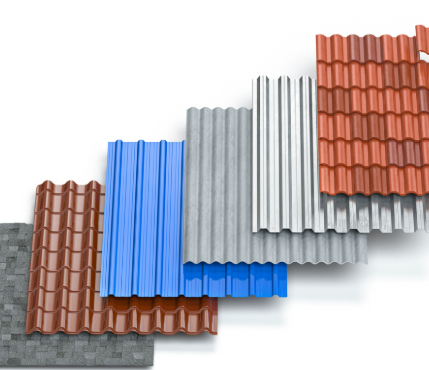
We are now living in an age where "once-in-a-century" heatwaves occur every few years, and hailstorms are turning standard asphalt shingles into Swiss cheese in regions that never used to see ice. Selecting a material based on looks alone is no longer just a stylistic choice; it’s a recipe for a $30,000 mistake. You need a "Skyward Shield"—a system tuned to your specific geographic coordinates, the local wind-uplift pressures, and the atmospheric stressors unique to your zip code. This guide dives deep into the physics of roofing to help you make a multi-decade investment that actually pays for itself.
The Physics of Climate Stressors (Why Roofs Actually Fail)
Roofs rarely fail simply because they hit a certain chronological age. In my experience, they fail because of cumulative material fatigue and specific chemical degradation triggered by the local environment. To choose the right shield, you must first identify the primary "enemy" dictated by your local geography.
1. Thermal Loading & UV Bombardment (The Arid Zone Enemy)
In the American Southwest or regions like the Middle East, your roof is essentially a solar oven. A standard dark asphalt shingle can hit 160°F by 2 p.m. This intense heat causes the oils in the bitumen (the sticky, petroleum-based stuff that holds the shingle together) to "volatilize" or evaporate. Once those oils are gone, the shingle becomes brittle, the granules shed, and the waterproof barrier hairline-cracks. This isn't just a roof problem—it’s an HVAC problem. When your roof deck stays hot until midnight, your AC is fighting a losing battle, driving your electricity bills to staggering heights.
2. Hydrostatic Pressure & The "Slow Rot" (The Humid Enemy)
In the Pacific Northwest or the humid Southeast, the enemy isn't the sun—it’s the lack of drying time. Constant dampness leads to a nightmare scenario called "interstitial rot." This happens when moisture gets trapped between the underlayment and the roof deck. Because the ambient humidity is so high, the plywood never fully dries out. It starts with a small fungal bloom and ends with the structural integrity of your home being compromised from the inside out. You won’t see it from the street, but you’ll feel it when the roof deck starts to "bounce" under a contractor’s feet.
3. Diurnal Temperature Swings (The Mountain Enemy)
If you live in the high desert or the Rockies, your roof undergoes massive expansion and contraction every 24 hours. A roof might be 140°F at noon and 40°F at midnight. This "thermal shock" creates physical stress at every nail penetration. Rigid, low-quality clay tiles will snap like dry twigs within a few seasons if they aren't specifically rated for high-frequency freeze-thaw cycles (ASTM C1167 Grade 1).
Material Science (Solutions That Actually Last)
1. Arid & High-Heat Zones: The Case for Thermal Mass
In sun-drenched regions, the goal is to prevent the roof from becoming a "thermal battery" that radiates heat into your bedrooms long after the sun goes down.
Concrete and Terra Cotta Tiles: These aren't just for that "Spanish Mission" aesthetic. Their high thermal mass allows them to absorb heat during the day and release it so slowly that much of it never penetrates the living space.
The "Air Gap" Secret: Pro tip—look for "S-tiles" or barrel tiles installed with a batten system. The curved profile creates an intentional air gap between the tile and the roof deck. This allows for natural convection; as the air under the tile heats up, it rises and escapes through the ridge, drawing cooler air in at the bottom. It’s essentially a passive, zero-cost cooling system for your attic.
Cool Roof Technology: If your budget dictates asphalt shingles, ensure they are "Cool Roof" rated by the CRRC (Cool Roof Rating Council) . These shingles use specialized granules with high solar reflectance (SR) and thermal emittance (TE). It can drop your attic temperature by up to 30 degrees during a Texas summer.
2. The Frozen North: Shedding Weight and Preventing Ice Dams
In heavy snow country, your roof's primary job is the management of weight and phase changes—the dangerous transition from ice to water.
Standing-Seam Metal: This is arguably the king of the North. The smooth, vertical ribs allow snow to "shed" before it can accumulate into a dangerous load that stresses your trusses. More importantly, metal conducts heat more evenly than asphalt, which helps minimize the temperature differentials that cause Ice Dams .
The Ice Dam Battle: Ice dams occur when heat leaking from your house melts the bottom layer of snow on the roof. That water runs down to the cold eaves and freezes, creating a dam that backs water up under your shingles. Metal roofing, combined with a "Cold Roof" design (massive intake at the soffits and continuous exhaust at the ridge), is the only true way to kill this problem for good.
Heavyweight Shingles: If you prefer the look of shingles in the North, go for "Architectural" or "Laminate" shingles. They have higher wind resistance (up to 130 mph) and provide a thicker barrier against the weight of accumulated snow.
3. Coastal & Hurricane Belts: Salt, Wind, and Impact
Synthetic Slate and Shakes: Natural slate is heavy and expensive; natural wood shakes rot in three years in a humid coastal environment. Synthetic versions, made from high-density polymer resins, are the modern solution. They are chemically inert (salt air won't touch them) and usually carry a UL 2218 Class 4 Impact Rating , meaning they can withstand 2-inch hailstones without cracking.
Aluminum vs. Steel: If you want a metal roof near the ocean, avoid galvanized steel at all costs. Even with high-end Kynar 500 paint, the cut edges will eventually rust. Aluminum, however, creates its own protective oxide layer. It’s more expensive upfront, but in a salt-spray zone, it’s a 50-year material versus a 10-year mistake.
The "Invisible" System (The Components That Save Your Home)
A common mistake I see homeowners make is focusing 100% of their budget on the "top layer." But a roof is a multi-component system. If you put $20,000 shingles over $200 worth of cheap felt, you’ve fundamentally failed.
Synthetic Underlayment: Throw the old-school 15-lb "tar paper" in the trash. It’s an organic material that tears easily and eventually rots. Modern woven polypropylene underlayments are nearly indestructible. You can leave them exposed to a storm for weeks during construction and they won't leak.
Self-Adhering Membranes (Ice and Water Shield): In any climate where the temperature drops below freezing, you must have a "peel-and-stick" rubberized asphalt membrane in the valleys and at the eaves. This material seals around every nail that passes through it, creating a watertight gasket that prevents leaks from ice dams.
The Flashing Truth: 90% of all roof leaks happen at the flashing (the metal bits around chimneys, skylights, and walls). In high-end installs, we use copper or stainless steel. Galvanized steel flashing will rust out long before a good tile or metal roof reaches the end of its life, forcing you to pay for a "repair" that requires tearing up half your good roof.
Financial Strategy (TCO vs. Sticker Price)
You have to stop looking at the "install price" and start looking at the Total Cost of Ownership (TCO) .
Let's do the math: A standard 3-tab asphalt roof might cost you $12,000 today. It lasts 15 years. Over a 45-year period, you will pay for that roof three times. But you’re not just paying for the shingles; you’re paying for three separate tear-offs, three sets of labor (which inflate at roughly 5% per year), and three disposal fees at the landfill.
Total 45-year cost: ~$60,000+ .
Now, consider a standing-seam metal roof or a high-end synthetic system for $35,000. It lasts 50+ years.
Total 45-year cost: $35,000 .
Suddenly, the "expensive" roof is actually the smartest financial move you can make. Additionally, many insurance companies (like State Farm or Allstate) offer significant premium discounts—sometimes up to 25%—for homes with Class 4 impact-rated roofs in hail-prone states like Colorado or Texas. Over a decade, those insurance savings can pay for a large chunk of the roof itself.
The "No-Nonsense" Answers
Q: Can I just install a new roof over my old one (a "lay-over")?
A: Never. While it saves you about $1,500 in labor and disposal, it’s a disaster for the house. It traps heat between the layers, which "cooks" the new shingles from the bottom up. More importantly, you can't inspect the roof deck for rot. If you have a soft spot in the plywood, you’re just covering a wound with a fresh bandage. It’s a shortcut that leads to a long-term headache.
Q: Is solar integration easier with certain materials?
A: Absolutely. If you plan on going solar, standing-seam metal is the undisputed winner. The panels can be clamped directly onto the raised seams of the roof without a single nail penetration. This preserves your watertight warranty while providing a rock-solid foundation for the panels. With asphalt, you have to bolt racks through the shingles, creating dozens of potential leak points.
Q: How do I vet a roofing contractor?
A: Ask for their "Workman’s Comp" certificate and their manufacturer certification (like GAF Master Elite or Owens Corning Platinum). If they aren't certified by the manufacturer, they can't offer the extended "system" warranties that cover labor, not just materials. Also, if they don't mention "ventilation calculation" during the quote, show them the door.
Conclusion: Engineering Your Legacy
Choosing a roofing material is an act of environmental reconciliation. It’s about acknowledging that your home is a target for the elements and choosing a shield that can turn those forces into manageable variables.
Don't just buy what your neighbor bought. Look at your sun exposure, your local humidity, and your long-term financial goals. Whether you choose the timeless thermal mass of clay or the high-tech resilience of standing-seam metal, remember that you are not just buying a product—you are engineering the future safety, efficiency, and resale value of your greatest asset. Your roof is the only thing between your family and the sky; make sure it’s a shield, not just a lid.