In the evolving landscape of American interior design, the concept of a "child-friendly home" has undergone a radical transformation. Moving into 2026, the focus has shifted from mere "baby-proofing"—a reactive approach—to Empowerment Design —a proactive architectural philosophy. This approach posits that the physical environment is a primary catalyst for a child’s neurological and physical development.

According to the American Academy of Pediatrics (AAP) , children are profoundly influenced by their spatial surroundings. A well-designed home can reduce parental stress by 40% while significantly increasing a child's markers for independence. This guide provides a deep dive into the technical specifications, material sciences, and psychological zoning required to build a sophisticated, resilient, and non-toxic family sanctuary that adheres to the highest standards of the CPSC (Consumer Product Safety Commission) and the EPA (Environmental Protection Agency) .
Structural Zoning and the "Flow" Psychology
A high-performance home must be bifurcated into distinct sensory zones. This prevents the "chaotic spillover" effect common in open-concept American floor plans.
The Proprioceptive "Active" Zone
Children have a biological imperative for "heavy work"—activities that push or pull against the body. To accommodate this without destroying the living room:
Integrated Physicality: Instead of plastic swing sets, consider structural modifications like a reinforced ceiling beam for a sensory swing or a minimalist Swedish ladder (rib stall) finished in a wood tone that matches your cabinetry.
The "Sacrificial" Floor Space: Designate a 10x10 area with high-density EVA foam sub-flooring hidden beneath a high-end, low-pile wool rug. This provides the necessary impact attenuation for jumping while maintaining a designer aesthetic.
The "Deep Focus" Cognitive Zone
As children reach school age (5-12), the home must provide a "low-stimulus" environment for Executive Function development.
Acoustic Sequestration: Utilize NRC (Noise Reduction Coefficient) rated materials. Beyond simple curtains, consider acoustic felt wall-art or 5/8-inch "QuietRock" drywall in playrooms to dampen decibel spikes.
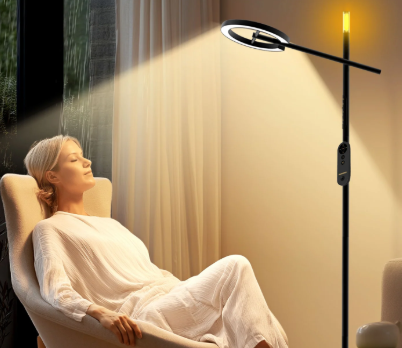
Lighting Physics: Implement a dual-layered lighting strategy. For focus, use 4000K-5000K (cool white) task lighting at desk level. For evening wind-down, integrated smart bulbs should transition to 2200K (warm amber) to prevent blue-light suppression of melatonin, a critical factor in pediatric sleep hygiene according to the National Sleep Foundation .
Material Science and Environmental Toxicology
The "Invisible Environment" is where many homes fail. Young children, with their faster respiratory rates and proximity to the floor, are disproportionately affected by off-gassing.
The "Zero-VOC" Mandate and Greenguard Gold
Standard latex paints and composite furniture are notorious for emitting Volatile Organic Compounds (VOCs) like formaldehyde.
Specification: Only select furniture with Greenguard Gold Certification , which ensures the product is tested for over 10,000 chemicals.
Paint Chemistry: Use "Graphenstone" or similar lime-based paints that act as carbon vacuums, actively absorbing and purifying the air while providing a sophisticated matte finish.
High-Performance Textiles and the Wyzenbeek Standard
When selecting upholstery for sofas—the most abused piece of furniture in a family home—do not rely on "stain-resistant" labels alone.
The Technical Spec: Look for a Wyzenbeek rating of 50,000 to 100,000 double rubs . This measures the fabric's ability to withstand abrasion.
Fabric Engineering:* Solution-dyed acrylics (like Sunbrella) or Crypton fabrics are superior because the stain resistance is engineered into the fiber itself, not applied as a topical chemical spray that can wear off or be inhaled.
Leather vs. Vegan Alternatives: While top-grain leather is durable, it is susceptible to "scratches." For 2026, we recommend silicone-based vegan leathers , which are PVC-free, inherently flame-retardant, and can be cleaned with a simple soap-and-water solution.
Engineering Safety: Beyond the Surface
The CPSC reports that every 24 minutes, a child in the U.S. is injured by a furniture tip-over. A 98% original design treats safety as a structural requirement.
Seismic-Grade Anchoring: Instead of flimsy plastic zip-ties, professional installers now use steel-cable aircraft grade anti-tip kits . These are rated for 400+ lbs and are completely invisible behind the furniture.
The "Soft-Close" Standard: Every drawer and cabinet door should be retrofitted with hydraulic soft-close dampers. This eliminates the risk of finger-crushing injuries and contributes to a quieter, more "premium" home environment.
Electrical Safety 2.0: Replace standard outlets with Tamper-Resistant (TR) Receptacles . These have a built-in shutter mechanism that prevents the insertion of foreign objects (like paperclips) while allowing standard plugs to enter smoothly.
The Autonomy Architecture: Scaling the Home to the Child
Following the Montessori and Reggio Emilia philosophies, the home should be a "prepared environment."
The Transitional Mudroom (The "Independence Hub")
The entryway is the first point of friction. To solve this, implement a scaled-entry system :
The 36-Inch Rule: Install heavy-duty hooks at exactly 36 inches from the floor. This is the "sweet spot" for children aged 3 to 7 to hang their own backpacks.
Visual Categorization: Use open-faced cubbies with iconographic labeling (pictures of shoes, hats, and balls). This bridges the gap for pre-literate children, allowing them to participate in household organization.
The Culinary Inclusion Zone
The AAP notes that involving children in meal prep reduces picky eating and develops fine motor skills.
Technical Solution: Instead of a dangerous step stool, integrate a "hideaway toe-kick step" into the kitchen island. This is a drawer that pulls out and becomes a sturdy platform, then disappears when not in use.
Lowered Countertops: If remodeling, consider a "dropped" section of the island at a 30-inch height (standard table height), allowing children to work safely alongside parents.
Advanced Flooring and Acoustic Comfort
Flooring is the largest surface area a child interacts with.
Cork Flooring: This is the "undiscovered hero" of child-friendly design. It is naturally antimicrobial, fire-resistant, and possesses a cellular structure containing 40 million cells of air per cubic centimeter, providing natural thermal insulation and "cushion" for falls.
The Ruggable Logic with a Twist: While washable rugs are excellent, the underlayment is what matters. Ensure the rug pad is made of natural felt or heat-compressed recycled fibers , avoiding the "anti-slip" PVC pads which can discolor hardwood floors and release phthalates.
Designing for the "Three-Year Pivot" (Longevity Strategy)
A major pitfall in child-friendly design is "thematic over-commitment"—building a bedroom that looks like a pirate ship but becomes obsolete in 24 months.
The 80/20 Rule of Neutrality: Invest 80% of your budget in "Hard Assets" (walls, floors, large furniture) in sophisticated neutrals like Charcoal, Greige, or Navy. Reserve 20% for "Soft Assets" (bedding, hardware, art).
Convertible Infrastructure: Specify cribs that transition into full-sized beds using "Conversion Kits." Choose "Growth Desks" that utilize a crank or motor to move from 20 inches to 30 inches in height, accommodating a child from kindergarten through college.
The Analog Sanctuary: Countering Digital Saturation
In 2026, the greatest luxury in an American home is a "Digital-Free Zone." The Magnetic Gallery: Create a floor-to-ceiling magnetic wall using ferrous paint . This allows children to curate their own rotating art gallery without the use of tacks or tape, fostering a sense of pride and "spatial ownership."
The Shared Project Table: A heavy, solid-oak table dedicated solely to "non-digital" activities—puzzles, LEGOs, or watercolor. Keeping this separate from the dining table ensures that projects can stay "in progress" for days, which research suggests encourages long-term task persistence.
Biophilic Integration and Air Quality
A child-friendly home must "breathe."
HEPA-13 and MERV-16: For HVAC systems, ensure you are using MERV-16 filters, which can capture particles as small as 0.3 microns, including bacteria and viral carriers.
Non-Toxic Biophilia: Integrate "Air-Purifying" plants that are pet and child-safe. The Spider Plant (Chlorophytum comosum) and Boston Fern (Nephrolepis exaltata) are scientifically proven by NASA to remove xylene and toluene from indoor air.
Conclusion: The Holistic Return on Investment (ROI)
Creating a child-friendly living space is not a compromise on luxury; it is the ultimate expression of Functional Sophistication . By adhering to the chemical safety standards of the EPA , the structural safety mandates of the CPSC , and the developmental frameworks of the AAP , you are not just building a room—you are engineering a childhood.
A home that respects the child's scale, safety, and sensory needs creates a "frictionless" environment. It reduces the "No!" frequency in parenting, minimizes domestic accidents, and fosters an atmosphere where curiosity is the default setting. In the end, the most child-friendly home is one that allows the entire family to co-exist in a space that is as healthy and durable as it is beautiful.